
Finding the Right Mountain Bike in 2026
Mountain biking has never been more popular — or more confusing to shop for. Walk into any bike shop or scroll through Amazon and you will be hit with dozens of terms: hardtail, full suspension, 27.5-inch, 29er, disc brakes, trigger shifters.
If you just want to know which mountain bike to actually buy in 2026, you are in the right place.
This guide breaks everything down in plain language — what actually matters when choosing a mountain bike, which type fits your riding style, what to look for at every budget and (at the end) five real, well-reviewed mountain bikes you can buy right now with direct product links.
Whether you are a first-time rider looking for your first trail bike or you are upgrading from an old department-store model, this guide has you covered.
Why Mountain Bike Shopping Feels So Overwhelming
The mountain bike market has expanded massively. Riders today are choosing between:
Budget aluminum-frame trail bikes
Mid-range hardtails with better suspension components
Full-suspension bikes for rougher terrain
Electric mountain bikes (eMTBs) for extended range and less fatigue
The good news: for most casual and intermediate riders, the decision comes down to just a few key factors — frame type, wheel size, suspension, drivetrain and brakes. Let's go through each one.
Hardtail vs. Full Suspension: Which Should You Choose?
This is the single most important decision when buying a mountain bike.
Hardtail Mountain Bikes
A hardtail has suspension only at the front fork, with a rigid rear frame.
Best for:
Beginners and casual trail riders
Smoother singletrack and forest trails
Riders on a budget
Lower maintenance needs
Pros: Lighter, cheaper, easier to maintain, more efficient for climbing. Cons: Less comfortable on rough, rocky or technical descents.
Full Suspension Mountain Bikes
These have suspension at both the front and rear, absorbing impact from both ends.
Best for:
Technical, rocky or root-heavy trails
Riders who prioritize comfort and control on descents
Intermediate to advanced trail and enduro riders
Pros: Much better traction and comfort on rough terrain. Cons: Heavier, more expensive and requires more maintenance.
Featured Snippet Answer: A hardtail mountain bike is best for beginners, smoother trails and budget-conscious riders, while a full-suspension mountain bike is better suited for rocky, technical terrain and riders who prioritize comfort on descents.
Wheel Size: 27.5 vs. 29
27.5-inch wheels are more maneuverable, accelerate quicker and suit shorter riders or tighter, twisty trails.
29-inch wheels roll over obstacles more easily, maintain momentum better and are generally faster on longer, rougher trails.
If you are unsure, 29-inch wheels have become the more popular default for trail riding in 2026, especially for taller riders.
Suspension Travel: What the Numbers Mean
Suspension travel (measured in millimeters) determines how much impact a bike can absorb:
Travel | Best For |
80–100mm | Cross-country, smoother trails |
120–140mm | All-around trail riding |
150–160mm+ | Enduro, aggressive descents |
For most casual and intermediate riders, 100–120mm of front suspension travel offers the best balance of comfort and efficiency.
Drivetrain and Gearing: How Many Speeds Do You Need?
Modern mountain bikes range from 7-speed entry-level setups to 21-speed and beyond. More speeds generally mean better range for tackling steep climbs and fast descents, but higher-speed drivetrains also mean more components to maintain.
For most trail riders, an 18 to 24-speed drivetrain with a rear derailleur and trigger shifters offers a strong balance of range and reliability.
Brakes: Mechanical vs. Hydraulic Disc Brakes
Mechanical disc brakes are more affordable and easier to service yourself — a solid choice for beginners.
Hydraulic disc brakes offer stronger, more consistent stopping power, especially valuable on steep or technical descents.
If you plan to ride aggressively or in wet/muddy conditions often, hydraulic brakes are worth the extra investment.
Frame Material: Aluminum vs. Carbon
Aluminum frames are the standard for budget and mid-range mountain bikes — durable, affordable and only slightly heavier than carbon.
Carbon frames are lighter and more responsive but come at a significantly higher price point, typically reserved for higher-end trail and race bikes.
For most riders under a mid-range budget, aluminum remains the smartest choice in 2026.
How to Choose the Best Mountain Bike for Your Budget
Under $500:
Solid entry-level hardtails with front suspension, mechanical disc brakes and 18–24 speed drivetrains — great for beginners and casual trail riding.
500–1,000:
Better-quality suspension forks, improved drivetrains and sometimes hydraulic brakes — ideal for regular trail riders.
$1,000+:
Full-suspension setups, lighter frames and higher-end components suited for more technical or frequent riding.
Common Mistakes First-Time Mountain Bike Buyers Make
Buying the wrong frame size — Always check height/frame-size charts before purchasing.
Overlooking suspension quality — A cheap fork can make even a good frame feel harsh on the trail.
Ignoring brake type — Mechanical brakes are fine for beginners, but frequent riders will want hydraulic.
Choosing based on looks over geometry — Frame geometry affects comfort and control far more than paint color.
Skipping proper assembly — Many mountain bikes ship partially assembled; improper assembly can affect safety and performance.
Top 5 Recommended Mountain Bikes for 2026
Here are five well-reviewed, widely available mountain bikes covering different budgets and riding styles.
Schwinn Bonafide Men and Women Mountain Bike (29-Inch Wheels, Front Suspension, 24-Speed) A reliable aluminum-frame hardtail with a Schwinn suspension fork, Shimano 24-speed drivetrain and mechanical disc brakes — a strong all-around choice for beginner to intermediate trail riders. 👉 View on Amazon
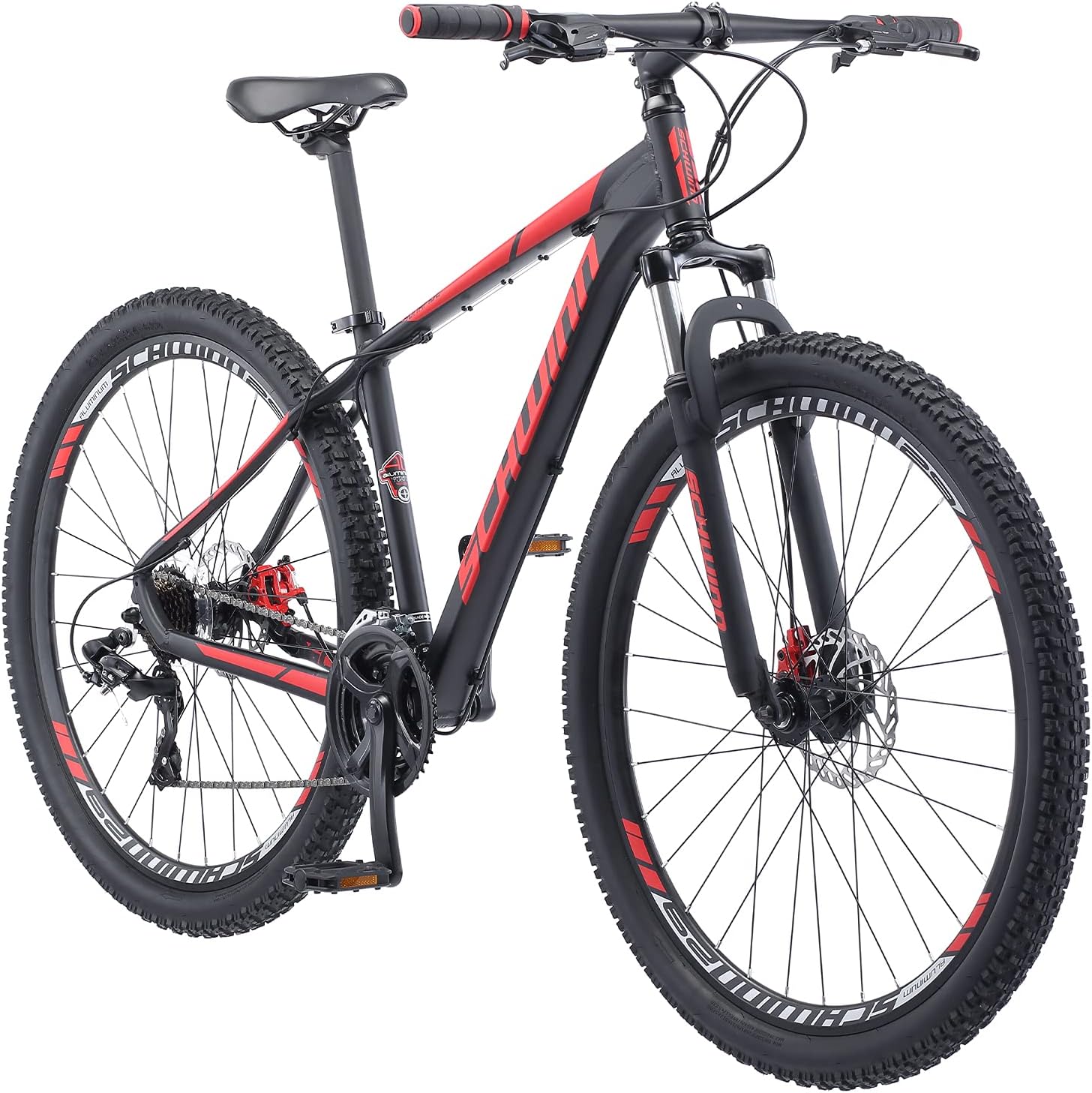
Schwinn Bonafide Men & Women Mountain Bike (29-Inch, 24-Speed)
A durable aluminum-frame hardtail featuring a Schwinn suspension fork, Shimano 24-speed drivetrain and front/rear mechanical disc brakes for dependable trail riding.
Schwinn Traxion Full Suspension Mountain Bike (29-Inch Wheels, 24-Speed Shimano Drivetrain) A full-suspension option for riders tackling rougher trails, featuring an 18-inch aluminum frame, Shimano drivetrain and mechanical disc brakes for reliable stopping power. 👉 View on Amazon

Schwinn Traxion Full Suspension Mountain Bike (29-Inch, 24-Speed)
Built for rougher terrain with an 18-inch dual-suspension aluminum frame, Shimano EZ-Fire shifters and mechanical disc brakes for extra comfort and control.
Mongoose Switchback Comp Expert Sport Trail Mountain Bike (27.5-Inch Wheels, 16–21 Speed Options) A versatile hardtail trail bike with an aluminum frame, front suspension and disc brakes, available in multiple speed and frame-size options to fit a wide range of riders. 👉 View on Amazon
Mongoose Switchback Trail Mountain Bike (27.5-Inch Wheels)
Highly agile hardtail trail bike featuring a lightweight T1 aluminum frame, front suspension fork and reliable disc brakes designed for tight singletrack riding.
Schwinn S29 Dual-Suspension Mountain Bike (29-Inch Wheels, 21-Speed) Featuring a 20-inch aluminum frame, dual suspension and mechanical disc brakes, this model is built for riders who want extra comfort over bumpy terrain without stepping up to a premium price point. 👉 View on Amazon
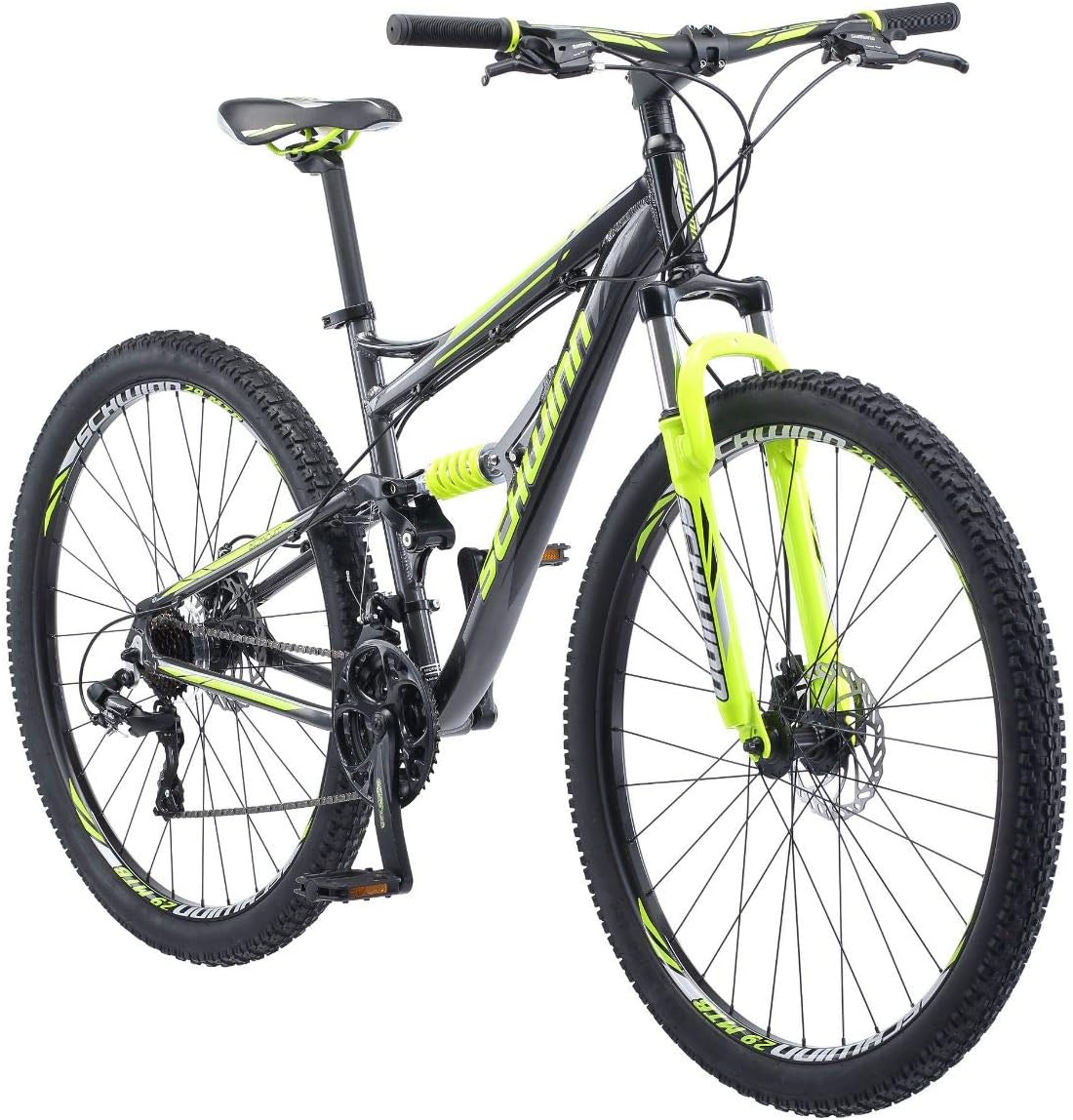
Schwinn S29 Dual-Suspension Mountain Bike (29-Inch, 21-Speed)
Features a 20-inch aluminum frame with dual-suspension damping, quick-release seat adjustments and front/rear mechanical disc brakes for taller riders on rough trails.
Mongoose Switchback 2 Mountain Bike (29-Inch Wheels, 9-Speed, Hydraulic Disc Brakes) A hardtail with a low-standover aluminum frame, 100mm travel front fork and hydraulic disc brakes — a great pick for riders who want stronger stopping power at a mid-range price. 👉 View on Amazon

Mongoose Switchback 2 Mountain Bike (29-Inch, Hydraulic Brakes)
Modern hardtail with a low-standover frame, 100mm front suspension travel, 9-speed 1x drivetrain and premium hydraulic disc brakes for stopping power in all weather.
Note: Always check the manufacturer's frame-size chart and rider height recommendations before purchasing and consider having your bike professionally assembled or tuned before your first ride.
Final Thoughts
The best mountain bike for you in 2026 is not necessarily the most expensive one — it is the one that matches your riding style, terrain and budget. Start by deciding between hardtail and full suspension, pick your wheel size and prioritize solid brakes and suspension over flashy extras. Get that right and you will have a bike that keeps you on the trail for years to come.
Frequently Asked Questions
A hardtail mountain bike with front suspension, 27.5 or 29 wheels and mechanical disc brakes is ideal for beginners — it is lighter, more affordable and easier to maintain.
29-inch wheels roll over obstacles more smoothly and maintain speed better on longer trails, while 27.5-inch wheels are more agile on tight, technical singletrack.
Beginners can get a reliable bike for 300–600, while intermediate riders looking for better components and suspension should budget 700–1,500.
Not necessarily. Full suspension is best for rocky or technical terrain, but a good hardtail is perfectly capable on moderate trails and is easier to maintain.
Frame size depends on your height and inseam — always check the manufacturer's size chart, since sizing varies between brands.