
You Don't Need Expensive Gear to Start Your Outdoor Adventure
So, you want to try camping or hiking. That is great! But then you open a gear website... and see boots for $200, jackets for $300 and packs for $450. Suddenly, you feel like outdoor life is only for rich people.
It's not. It is for everyone. And you do not need to spend a lot of money to enjoy it.
In this guide, we will show you the best outdoor gear for beginners on a budget. Simple gear. Fair prices. Easy to understand, no confusing words. Just honest tips to help you get outside without emptying your wallet.
Why Beginners Overspend (And How to Avoid It)?
Many new campers and hikers make the same mistake. They think expensive gear = better gear. But that is not always true.
Here is the truth: expensive gear is often made for experts who hike hundreds of miles a year. As a beginner, you don't need that. You need gear that is:
Simple to use
Comfortable
Reliable (won't break on your first trip)
Affordable
That's it. Nothing fancy. Let's look at what you really need.
The Only 7 Things a Beginner Really Needs
1. A Good Pair of Beginner Hiking Shoes
You don't need $200 hiking boots for your first trip. A solid pair of budget hiking shoes with good grip and ankle support is enough. Look for:
Waterproof material
Good traction on the sole (bottom of the shoe)
Comfortable fit (try them with hiking socks)
Budget tip: Buy from last season's collection. Brands drop prices when new models come out, but the old shoes still work great.
Recommended Pick: Merrell Moab 3 Hiking Shoes
Why it fits: Known as the benchmark for budget-conscious hikers, it offers durable Vibram TC5+ outsoles for exceptional grip, heel air-cushioning for shock absorption, and a comfortable out-of-the-box fit without a painful break-in period.

Merrell Moab 3 Hiking Shoes
Comfortable and durable hiking shoes with reliable traction, making them a solid choice for beginner hikers.
2. A Simple, Reliable Backpack
You don't need an ultralight, $450 designer pack. A basic 30–40 liter backpack with padded straps and a hip belt is perfect for day hikes and short trips.
Look for:
Padded shoulder straps
A chest or hip strap (this saves your back)
Enough pockets to stay organized
Recommended Pick: TETON Sports Oasis 1100 / Trailfell 35L Daypack
Why it fits: Built with high-density ripstop fabric, thick ergonomic shoulder padding, and integrated sternum/waist support straps to keep heavy gear balanced across your hips.

TETON Sports Oasis / Trailfell Backpack
: A practical beginner-friendly backpack with padded straps and support for day hikes and short outdoor trips.
3. A Budget Tent (For Overnight Trips)
If you are only doing day hikes, skip this one for now. But if you're camping overnight, a simple 2-person tent works well for most beginners. You don't need the fanciest brand — just something that:
Keeps rain out
Is easy to set up alone
Is not too heavy to carry
Recommended Pick: Coleman Sundome 2-Person Camping Tent
Why it fits: Features Coleman's WeatherTec system with inverted seams and a welded floor to lock out water, snag-free continuous pole sleeves that set up in under 10 minutes, and large ground vents for dependable airflow.

Coleman Sundome 2-Person Camping Tent
An easy-to-set-up tent with weather protection, making it a practical choice for beginner campers.
4. A Basic Sleeping Bag
Match your sleeping bag to the season you'll camp in. A budget 3-season sleeping bag covers spring, summer, and fall — the most common times beginners go camping.
Recommended Pick: Coleman Brazos Cold-Weather 3-Season Sleeping Bag (20°F–40°F)
Why it fits: Uses a draft tube along the zipper to prevent cold air leaks, a no-snag patented zipper design, and durable polyester fill that stays warm in fluctuating spring/fall temperatures.

Coleman Brazos Cold-Weather 3-Season Sleeping Bag
A practical sleeping bag designed for cooler camping trips, with a comfortable and durable construction.
5. A Headlamp (Not a Flashlight)
This is one of the cheapest but most useful items you can buy. A headlamp keeps your hands free for cooking, setting up your tent, or walking at night. Budget headlamps work just as well as expensive ones for casual trips.
Recommended Pick: Black Diamond Astro 300 Headlamp
Why it fits: Delivers a bright 300-lumen beam with full dimming and strobe settings, features an IPX4 stormproof water-resistant housing, and uses dual-fuel power (standard AAA batteries or rechargeable pack).
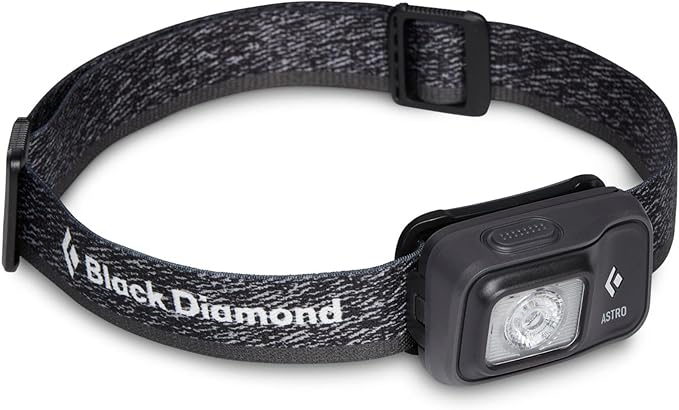
Black Diamond Astro 300 Headlamp
A compact hands-free headlamp with a bright beam, useful for camping, hiking, and outdoor activities.
6. A Water Filter or Water Bottle
Water safety matters, even on short hikes. A simple, affordable personal water filter lets you drink from streams or lakes safely — no need for the priciest model on the market.
Recommended Pick: Sawyer Products SP129 Squeeze Water Filtration System
Why it fits: Weighs only 3 ounces, removes 99.99999% of bacteria and protozoa using a 0.1-micron hollow fiber membrane, and screws directly onto standard water bottles or included squeeze pouches.

Sawyer Products SP129 Squeeze Water Filter
A lightweight personal water filtration system designed for hiking, camping and outdoor adventures.
7. A Basic Rain Jacket
Weather can change fast outdoors. A lightweight, budget rain jacket keeps you dry and comfortable, even if it's not the most "technical" jacket on the shelf.
Recommended Pick: Columbia Glennaker Lake / Watertight II Rain Jacket
Why it fits: Utilizes Columbia's Omni-Shield waterproof nylon fabric, sealed seams, an adjustable storm hood, and packs away compactly into its own interior pocket for easy trail storage.

Columbia Watertight II Rain Jacket
A lightweight waterproof jacket that helps protect beginners from unexpected rain during outdoor adventures.
Smart Ways to Save Money on Outdoor Gear
Here are simple tricks to get good gear without spending too much:
Buy last year's models – Stores discount older gear when new versions launch.
Check outlet and clearance sections – Many outdoor brands have outlet stores online.
Rent gear first – Before buying a tent or sleeping bag, rent one to see what you actually like.
Borrow from friends – Perfect for your very first trip.
Watch for seasonal sales – Spring and end-of-summer sales often have big discounts.
Buy used gear – Outdoor gear resale groups and stores often sell gently-used items in great shape.
What NOT to Buy as a Beginner?
Save your money. Skip these until you know you'll really use them:
Ultralight, expensive gear (great for experts, overkill for beginners)
Specialty knives and tools you may never use
Trendy "influencer" gear that looks nice in photos but isn't practical
Multiple pairs of the same item "just in case"
Start simple. You can always upgrade later once you know what you enjoy.
Final Thoughts: Start Small, Enjoy More
The best outdoor gear for beginners isn't the most expensive — it's the gear that gets you outside, keeps you safe, and makes you excited for your next trip. Start with the basics, save your money, and build your outdoor gear collection slowly as you learn what you really need.
Ready to find great deals on beginner outdoor gear? Check out our latest gear deals and discounts at Deal Spotted Today — we help you save money while you explore the outdoors.
Frequently Asked Questions
A basic starter kit (shoes, backpack, headlamp, water bottle, rain jacket) can cost much less than premium gear. Focus on the essentials first, then add more gear as you gain experience.
For short, easy trails, sturdy sneakers can work. For longer or rougher trails, budget hiking shoes with better grip and support are worth the investment.
Yes, in most cases. Check items like tents and backpacks for damage, but shoes, sleeping bags, and clothing are usually safe if in good condition.
A comfortable pair of shoes and a reliable water source (bottle or filter) are the top priorities. Comfort and safety come before anything else.
Once you know your outdoor hobby is a regular part of your life — and you understand what features actually matter to you — that's the right time to invest in higher-end gear.